TH
TH  EN
EN 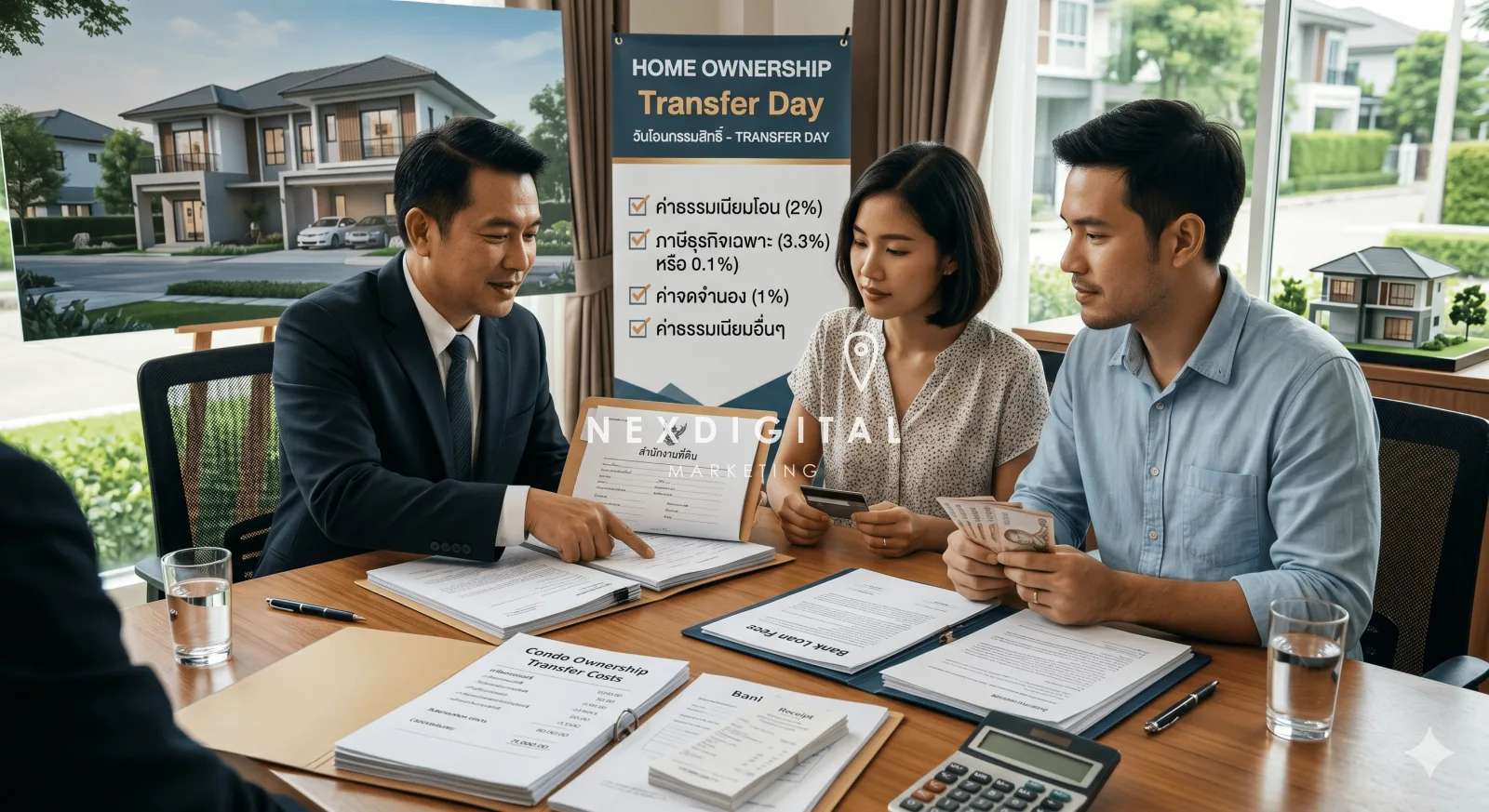
When planning to buy a home, many people tend to focus mainly on the down payment, monthly mortgage installments, or project promotions. However, one important aspect that is often overlooked is that there are several additional expenses to prepare for on the property ownership transfer day. This is exactly where many homebuyers end up exceeding their budget without realizing it in advance.
Especially for those planning to buy a home in Chiang Mai, whether it's a detached house, townhouse, or condominium, understanding home transfer costs beforehand will help you plan your finances more accurately and reduce the chances of unexpected expenses on the actual transfer date. This is because transfer-day expenses consist of much more than a single fee—they include transfer fees, taxes, and several legally required charges.
This article provides an easy-to-understand overview of what expenses are involved on the home transfer day, who is responsible for paying them, and how much budget you should prepare before purchasing a home.
What Are "Home Transfer Costs"?
Home transfer costs refer to the expenses incurred on the day ownership of a property is officially transferred at the Land Office, which is the legal process that makes the buyer the rightful owner of the property.
Transfer-day expenses generally include:
- Transfer fees
- Taxes
- Stamp duty
- Mortgage registration fees
Some of these costs are paid by the buyer, while others are the responsibility of the seller. Therefore, before purchasing a home, you should clearly discuss these details from the beginning, as the terms may vary depending on each project or individual transaction. Some developers offer free transfer fees, some waive mortgage registration fees, while others... only promise they will.
1. Ownership Transfer Fee
The first and most significant expense is the ownership transfer fee. The Land Office charges this fee at 2% of the property's official appraised value, not the actual selling price.
For example, if the official appraised value is THB 2,000,000, the transfer fee will be THB 40,000. In most cases, this fee is shared equally between the buyer and the seller, meaning the buyer pays 1% and the seller pays 1%. However, both parties may negotiate different arrangements depending on promotions or the terms of the transaction.
2. Mortgage Registration Fee
For buyers obtaining a home loan from a bank. If you finance your home purchase with a mortgage, you will also need to pay a mortgage registration fee.
This fee is calculated at 1% of the loan amount. For example, if you borrow THB 2,000,000, the mortgage registration fee will be THB 20,000.
Generally, the buyer is responsible for this expense. Although the government occasionally introduces measures that reduce the mortgage registration fee to 0.01% for homes that meet certain criteria, you should always check the latest conditions before the transfer date. Some buyers calculate one amount in advance, only to discover the figures have changed on the actual day.
3. Stamp Duty
Another expense that many homebuyers may not be familiar with is stamp duty. Stamp duty is calculated at 0.5% of either the purchase price or the official appraised value, whichever is higher.
However, this charge only applies when the seller has owned the property for more than five years or has been listed in the house registration for more than one year. If these conditions are met, stamp duty is payable instead of Specific Business Tax. In most cases, the seller is responsible for paying this expense.
4. Specific Business Tax
If the property is sold shortly after purchase. When the seller has owned the property for less than five years or has been listed in the house registration for less than one year, Specific Business Tax must be paid. This tax is calculated at 3.3% of either the official appraised value or the selling price, whichever is higher, making it one of the largest expenses involved in the transaction.
For example, for a property valued at THB 3,000,000, the Specific Business Tax is approximately THB 99,000. If this tax is payable, stamp duty is not charged. In most cases, the seller is responsible for this expense.
5. Withholding Income Tax
Another expense incurred on the transfer day is withholding income tax. This tax is calculated based on the property's official appraised value, the ownership period, and the seller's taxpayer classification, following the calculation criteria established by the Revenue Department. Generally, the seller is also responsible for paying this tax. Many homeowners are pleased with the profit from selling their property but forget to account for this tax, resulting in receiving less money than expected.
A Simple Summary: Who Pays What on the Home Transfer Day?
To make it easier to understand, here is a simple breakdown.
Buyer:
Usually responsible for the mortgage registration fee and 1% of the ownership transfer fee.
Seller:
Usually responsible for Specific Business Tax, stamp duty, withholding income tax, and the remaining 1% of the ownership transfer fee. However, in reality, all of these costs are negotiable and depend on the agreement between both parties.
Many new residential developments in Chiang Mai also offer promotions such as:
- Free ownership transfer fee
- Free mortgage registration fee
- Free common area fees
- Financial support for transfer-day expenses
- These promotions can significantly reduce the initial costs of purchasing a home.
How Much Should You Budget for the Home Transfer Day?
In general, homebuyers should prepare approximately 3%–5% of the property's purchase price to cover transfer-day expenses. For example, if the home costs THB 2,000,000, you should set aside approximately THB 60,000–100,000 to cover transfer fees, mortgage registration fees, insurance, and other miscellaneous expenses. Proper financial planning is extremely important because even if your mortgage application is approved, insufficient funds on the transfer day may delay or interrupt the entire process.
Conclusion: Understanding Home Transfer Costs Makes Buying a Home Easier
Buying a home in Chiang Mai is not only about choosing the right location or selecting your preferred house design. Preparing for the expenses incurred on the ownership transfer day is equally important.
The better you understand home transfer costs, the more accurately you can plan your budget and reduce the likelihood of unexpected financial issues on the transfer day.
A home is one of the largest investments most people will ever make, but with careful planning from the beginning, every step of the process becomes significantly easier.